Children’s Eye Health and Safety Month: A Parent’s Guide
Protect your child’s vision with simple, proven steps during Children’s Eye Health and Safety Month and all year long.
Children’s Eye Health and Safety Month shines a light on how parents can protect kids’ sight at every age. You can lower risks from injuries, screens, UV exposure, and sports with a few smart habits and regular eye care. The tips below keep your child’s eyes safe today and set them up for healthy vision tomorrow.
Why Kids Are Especially Vulnerable
Children explore constantly. They move fast, test limits, and misjudge distance. They don’t always understand how quickly toys, projectiles, or chemicals can injure delicate eye structures. Older kids push boundaries with “fun” gear like laser pointers, airsoft toys, drones, and fireworks. Younger children face extra risk because their visual system continues to develop. Trauma or untreated problems in early childhood can leave lifelong effects on vision.
The Biggest Risks (and How You Reduce Them)
1) Toys and Play
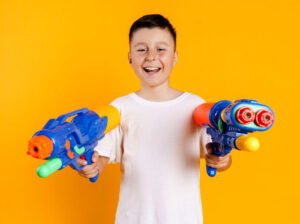
Projectiles, sharp edges, and riding toys cause many injuries each year. Emergency departments treated ~209,500 toy-related injuries in 2022, and 76% involved children under 15; nearly half involved the head/face.
Action: choose age-appropriate toys, store projectiles securely, and supervise rough play.
2) Sports and Activities
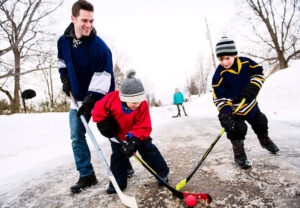
Balls, sticks, and collisions injure eyes in seconds. Pediatric and ophthalmology groups recommend sport-specific ASTM F803-rated eye protection for at-risk sports (basketball, racquet sports, baseball/softball, lacrosse, hockey, soccer). Protective eyewear that meets ASTM F803 protects far better than streetwear glasses.
Action: gear up with ASTM-rated goggles (polycarbonate lenses), helmets/face shields where required, and a proper fit.
3) Laser Pointers & “Gadgets”
High-output laser pointers can burn the retina and cause permanent damage within seconds. Treat laser pointers as tools, not toys; teach kids never to aim them at any eyes.
Action: lock lasers away; supervise use for school projects only.
4) Sun/UV Exposure
UV light can damage the eye over time. Pick sunglasses that block 100% UVA/UVB (UV400) and fit snugly; add a brimmed hat for extra protection.
Action: pack kid-size UV-blocking sunglasses for school, sports, and outdoor play.
5) Screens and Digital Eye Strain
Kids focus up close for long stretches and blink less, which drives eye strain. Use the 20-20-20 rule: every 20 minutes, look 20 feet away for 20 seconds and blink.
Action: set app timers, build outdoor play breaks, and keep screens out of the last hour before bed.
6) Household Chemicals
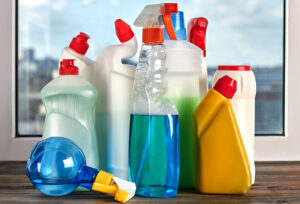
Splashes from cleaners, detergents, or pods can cause emergencies—toddlers face the highest risk. If a chemical gets into the eye, flush immediately with clean water or saline and seek urgent care. Aim for 10–15 minutes of steady rinsing while you call your eye doctor.
Action: Lock chemicals up, keep detergent pods out of reach, and post Poison Control and your eye clinic’s number on the fridge.
Symptoms That Need Same-Day Care
Call your eye doctor or go to urgent care/ER if your child has any of the following:
Sudden vision loss, double vision, or new blind spots
Eye pain, light sensitivity, or a “curtain”/flashes/floaters
A hit to the eye from a ball, stick, or high-speed object
Chemical exposure (flush first), a cut, or a foreign body
Redness with discharge, swelling that worsens, or fever
(For chemical exposures: keep flushing en route; do not use drops unless a clinician instructs you.)
Healthy Habits That Protect Kids’ Eyes
Pack ASTM F803 sport goggles for practices and games.
Choose 100% UV sunglasses and a hat for outdoor time.
Follow 20-20-20 during homework and gaming.
Store lasers and projectiles out of reach; set rules before use.
Lock cleaners/detergents in high cabinets; keep eyewash handy.
Vision Screening and Exam Schedule
Your pediatrician screens vision at regular well-child visits and refers for a comprehensive exam when needed (AAO). You can also follow the AOA guidance for complete exams with an eye care professional:
6–12 months: first comprehensive eye exam (InfantSEE eligible)
Ages 3–5: at least one comprehensive exam
Before first grade and beyond: every 1–2 years, or yearly if your child wears glasses/contacts or has risk factors
Your Next Steps are with Southwest Eye Institute
Protecting your child’s vision for Children’s Eye Health and Safety Month, starts with our comprehensive guide for parents. Book a pediatric eye exam at Southwest Eye Institute. Our team screens for refractive error, eye teaming, amblyopia, and injury risks, then builds a simple plan you can follow at home, school, and on the field.
To provide the best experiences, we use technologies like cookies to store and/or access device information. Consenting to these technologies will allow us to process data such as browsing behavior or unique IDs on this site. Not consenting or withdrawing consent, may adversely affect certain features and functions.
Functional
Always active
The technical storage or access is strictly necessary for the legitimate purpose of enabling the use of a specific service explicitly requested by the subscriber or user, or for the sole purpose of carrying out the transmission of a communication over an electronic communications network.
Preferences
The technical storage or access is necessary for the legitimate purpose of storing preferences that are not requested by the subscriber or user.
Statistics
The technical storage or access that is used exclusively for statistical purposes.The technical storage or access that is used exclusively for anonymous statistical purposes. Without a subpoena, voluntary compliance on the part of your Internet Service Provider, or additional records from a third party, information stored or retrieved for this purpose alone cannot usually be used to identify you.
Marketing
The technical storage or access is required to create user profiles to send advertising, or to track the user on a website or across several websites for similar marketing purposes.