Myopia Treatment: What to Know About Nearsightedness and Your Options
Myopia treatment matters when road signs start looking fuzzy, classroom boards blur, or you keep moving your screen closer just to stay comfortable. Myopia, also called nearsightedness, means you can usually see up close better than you can at a distance. The right treatment depends on how strong your prescription is, how old you are, how stable your vision has been, and whether you want a non-surgical or surgical option.
For many people, treatment starts with a comprehensive eye exam and a clear prescription. For some adults, it may also include vision correction procedures that reduce dependence on glasses or contacts. At Southwest Eye Institute, the goal is not just to sharpen your distance vision, but to match your treatment to your daily life, your long-term eye health, and what feels realistic for you.
What is Myopia?
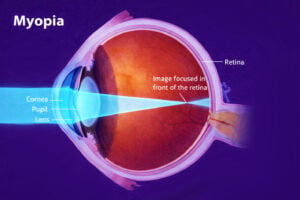
Myopia is a refractive error. That means the eye does not bend light the way it should. In a myopic eye, light focuses in front of the retina rather than directly on it, so distant objects appear blurry.
You might notice myopia when driving, watching TV, sitting in the back of a classroom, or trying to read signs from across a room. Up close, many people still see well, especially early on. That is part of what makes myopia easy to ignore until the blur starts affecting everyday life.
Common Signs of Myopia
Myopia can look different from person to person, but a few patterns show up often:
Blurry distance vision
Squinting to see more clearly
Headaches after visual tasks
Eye strain, especially after screens or reading
Trouble seeing road signs or presentation screens
Kids sitting very close to TVs or holding devices near their faces
If your child seems frustrated by distance vision, loses interest in schoolwork, or complains that the board looks blurry, it is worth scheduling an eye exam sooner rather than later.
Why Myopia Happens
Myopia usually develops because the eye grows too long from front to back, or because the cornea is shaped so that light focuses in front of the retina. Family history can play a role. So can lifestyle patterns, especially long periods of close-up work and limited time outdoors.
That does not mean screens alone “cause” myopia in a simple one-to-one way. But if blurry distance vision is getting worse, an exam helps you move from guessing to a clear plan.
Why Myopia Treatment Matters
It is easy to think of myopia as “just needing glasses,” but that is not always the whole story. As myopia becomes more severe, the eye may be at greater risk of other problems over time. Higher levels of myopia can be associated with a greater chance of retinal issues, glaucoma, and cataracts later in life.
That is why myopia treatment is not only about convenience. It is also about monitoring change, keeping your prescription current, and ensuring your eye health is checked along with your vision.
Myopia Treatments
The best myopia treatment depends on your age, prescription, corneal health, lifestyle, and whether your vision has stabilized.
Glasses
For many patients, glasses are the simplest and safest starting point. They sharpen distance vision without touching the eye, and they are easy to update as your prescription changes.
Glasses can be a great choice if you want flexible correction for driving, work, school, or daily wear. For children and teens, glasses are often the first step because their eyes may still be changing.
Contact lenses
Contact lenses can give you a wider field of view and may feel more convenient for sports, work, or active routines. Some patients simply prefer how they look and feel with contact lenses compared with glasses.
If you are interested in contacts, your eye doctor will look at your prescription, tear film, eye surface, and habits before recommending a good fit. Comfort matters, but safety matters just as much.
LASIK
For adults with a stable prescription, healthy corneas, and the right measurements, LASIK can be an excellent option for myopia treatment. LASIK reshapes the cornea so light focuses more accurately on the retina, reducing or even eliminating the need for glasses or contacts.
At Southwest Eye Institute, LASIK is one of the available vision correction options for nearsightedness. A consultation helps determine whether you are a strong candidate or whether another procedure would better suit your eyes.
PRK if LASIK is Not the Best Fit
Some adults want laser vision correction but are not ideal LASIK candidates because of corneal thickness, dry eye concerns, or other findings on testing. In those cases, PRK may be a better option.
PRK also reshapes the cornea, but it does so without creating the LASIK flap. It can be a strong alternative for patients who still want to reduce dependence on eyewear but need a different surgical approach.
EVO ICL for Moderate to High Prescriptions
If you have moderate to high nearsightedness or are not a good candidate for corneal laser surgery, EVO ICL may be worth discussing. Instead of reshaping the cornea, EVO ICL places a corrective lens inside the eye.
This can be a helpful option for some patients who want surgical vision correction but do not want LASIK or PRK.
Refractive Lens Exchange
Refractive lens exchange, or RLE, is a lens-based procedure that may make sense for some adults, especially if age-related lens changes are also part of the picture. Rather than reshaping the cornea, RLE replaces the eye’s natural lens with an artificial one designed to improve vision. For the right patient, RLE can address refractive error while also reducing future lens-related limitations.
How Southwest Eye Institute Decides Which Treatment Fits You
There is no one-size-fits-all answer here. The right plan starts with a medical eye exam, not just a quick prescription check.
At Southwest Eye Institute, a comprehensive eye exam can include visual acuity testing, refraction, eye pressure screening, and a closer look at the front and back of the eye. If needed, the team may also use additional imaging to understand your eye health and next steps. That matters because blurry distance vision is not always “just myopia,” and not every patient with myopia should choose the same treatment path.
In practical terms, your recommendation may depend on:
Whether you want non-surgical correction or less dependence on eyewear
That personalized approach aligns with Southwest Eye Institute’s broader model of pairing advanced options with customized recommendations rather than pushing everyone toward the same solution.
When to Schedule an Eye Exam for Myopia
You should schedule an exam if:
Distance vision seems blurrier than it used to be
You are squinting more often
Headaches or eye strain show up after visual tasks
Your child reports trouble seeing the board at school
Your glasses or contacts no longer feel sharp
You want to explore surgical vision correction
You do not need to wait until the blur becomes severe. Acomprehensive eye exam is often the fastest way to figure out whether you need a simple prescription update, closer monitoring, or a conversation about longer-term myopia treatment options.
Find the Right Myopia Treatment for Your Eyes
Myopia treatment should make your life easier, not more confusing. Schedule a comprehensive eye exam atSouthwest Eye Institute to update your prescription, check your eye health, and determine whether glasses, contacts, LASIK, PRK, EVO ICL, or refractive lens exchange is the right next step for clearer distance vision.
FAQ: Myopia Treatment
Myopia treatment is any approach used to improve nearsighted vision and help you see distant objects more clearly. It may include glasses, contact lenses, or, for some adults, procedures like LASIK, PRK, EVO ICL, or refractive lens exchange.
Yes. Myopia often starts in childhood and can progress as the eyes grow. In adults, prescriptions may also change, which is why regular eye exams matter.
No. Many patients do very well with glasses or contact lenses. Surgery is only one treatment option, and it is usually considered for adults with stable prescriptions who want to reduce dependence on eyewear.
The best option depends on your prescription, corneal health, age, lifestyle, and goals. Some adults do best with updated glasses or contacts, while others may qualify for LASIK, PRK, EVO ICL, or RLE.
Yes, but treatment for children usually starts with regular eye exams and updated prescription correction, not refractive surgery. If your child has blurry distance vision, an exam is the best first step.
You should schedule an exam any time distance vision becomes blurry, your prescription seems outdated, your child is struggling to see clearly, or you want to explore vision correction options beyond glasses or contacts.
Related Posts
Better Vision Starts Here!
If you’re experiencing vision changes, don’t wait until they worsen. Schedule your eye exam today!