If you’re wondering why your eye prescription keeps changing, the answer may involve more than simply needing stronger glasses. Frequent vision prescription changes can happen when the eye’s focusing system, lens, tear film, cornea, or overall health changes faster than expected. Learn what may cause your prescription to shift and when a medical eye exam at Southwest Eye Institute can help uncover the reason.
Vision prescription changes can feel frustrating, especially when your new glasses only seem to help for a short time. Sometimes, a small change to a prescription is normal. Other times, frequent changes may point to dry eye, cataracts, blood sugar fluctuations, cornea changes, or another eye health concern that needs a closer look.
Maybe street signs look soft again. Maybe your computer vision comes and goes. Or maybe you just updated your glasses, but night driving around El Paso or Las Cruces still feels harder than it should. When your prescription keeps changing, the real question is not always “Do I need stronger glasses?” Sometimes, the better question is “Why is my vision changing this often?”
At Southwest Eye Institute, our team can evaluate your vision, check your eye health, and help determine whether your prescription changes are routine or connected to an underlying medical eye condition.
Are Vision Prescription Changes Normal?
Some prescription changes are normal. Children, teens, and young adults may experience changes in their eyes as they grow. Adults may notice near-vision changes in their 40s due to presbyopia, which can make reading and close work more difficult. Later in life, cataracts can also change how light focuses inside the eye.
A prescription update every year or two does not always mean something is wrong. However, frequent or sudden changes warrant attention, especially if accompanied by blurred vision, glare, halos, double vision, eye pain, headaches, distorted vision, or difficulty seeing at night.
A comprehensive eye exam can help separate a simple refractive change from a medical issue that needs treatment.
Dry Eye Can Make Vision Fluctuate
Dry eye is one of the most common reasons vision changes throughout the day. Your tear film helps create a smooth surface for clear vision. When the tear film becomes unstable, your sight may blur, clear after blinking, then blur again.
This can make it feel like your glasses prescription is wrong, even when the prescription itself may be close. The American Academy of Ophthalmology lists blurred or fluctuating vision as a symptom that can occur during dry eye flares.
Dry eye-related vision changes may feel worse when you:
Work on a screen for long periods
Drive in dry air or wind
Spend time in the desert heat or air conditioning
Wear contact lenses
Read for long stretches
Wake up with irritated or gritty eyes
In El Paso and Las Cruces, dry air, wind, sun exposure, and indoor cooling can all make ocular surface symptoms more noticeable. If your vision changes from morning to night, dry eye may be a contributing factor.
Cataracts Can Change Your Glasses Prescription
Cataracts develop when the eye’s natural lens becomes cloudy. As cataracts progress, they can change how light passes through the eye. That can lead to blurry vision, glare, halos, faded colors, trouble with night driving, and changes in prescription.
In early cataracts, a new prescription for glasses may help for a while. The American Academy of Ophthalmology notes that cataracts often cause a change in eyeglass prescription, and new glasses may restore good vision at an early stage.
Over time, though, glasses may stop helping enough. That usually happens because the clouded lens itself has become the main issue. If cataracts are causing changes in your vision prescription, your doctor can explain whether monitoring, updated glasses, or cataract surgery may be the right next step.
Blood Sugar Changes Can Affect Focus
Blood sugar changes can temporarily affect vision because high glucose levels can alter fluid levels in the eye, leading to swelling in the tissues involved in focusing. The National Institute of Diabetes and Digestive and Kidney Diseases explains that blurry vision can occur for days or weeks when glucose levels fluctuate, especially during changes in diabetes treatment or medications.
This matters because a prescription measured during unstable blood sugar may not reflect your best long-term vision. If you have diabetes or recently changed diabetes medication, tell your eye doctor before your exam.
You should also schedule a medical eye exam if you have diabetes and notice:
Blurry vision that comes and goes
New floaters
Dark spots
Trouble reading
Distorted vision
Sudden changes in clarity
Diabetes can affect the eyes in several ways, so changes to prescriptions should not be ignored.
Keratoconus Can Cause Rapid Prescription Changes
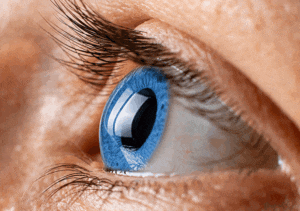
Keratoconus happens when the cornea thins and bulges into a cone-like shape. Because the cornea helps focus light, this shape change can cause distorted vision, ghosting, glare, and frequent changes in glasses prescriptions.
The American Academy of Ophthalmology notes that patients with keratoconus commonly report blurred or distorted vision and frequent changes in spectacle prescription.
Keratoconus often begins earlier in life, but adults can still be diagnosed even after years of changing prescriptions or poor vision. If glasses never seem sharp enough, or if one eye changes more than the other, your doctor may recommend corneal testing.
Southwest Eye Institute offers keratoconus evaluation andtreatment options in El Paso, including corneal cross-linking for appropriate patients.
Other Reasons Your Prescription May Keep Changing
Vision changes can come from several parts of the eye and body. That is why a full exam matters.
Other possible causes include eye strain, medication side effects, contact lens overwear, corneal irregularity, eye inflammation, hormonal changes, previous eye surgery, retinal concerns, and glaucoma-related vision changes.
Glaucoma does not usually cause frequent changes in glasses prescription, unlike cataracts or corneal changes. Still, it can affect vision over time, often before symptoms become obvious. Southwest Eye Institute’s glaucoma guidance emphasizes regular eye exams because glaucoma-related vision loss can be permanent if optic nerve damage progresses.
When Changing Glasses Prescriptions, You Need a Medical Eye Exam
A medical eye exam is a smart next step when prescription changes happen often, suddenly, or with other symptoms. It can help your doctor look beyond the numbers on your glasses to evaluate your tear film, cornea, lens, retina, optic nerve, intraocularpressure, and overall eye health.
Schedule an exam if you notice:
A prescription that changes several times in a short period
Blurry vision that comes and goes
Trouble seeing at night
New glare or halos
Vision that does not feel clear, even with new glasses
Distorted or wavy vision
Sudden vision loss
Eye pain, redness, or severe headache
Diabetes-related vision changes
If symptoms are sudden or severe, do not wait for a routine appointment. Call for guidance or seek urgent care.
What To Expect At Southwest Eye Institute
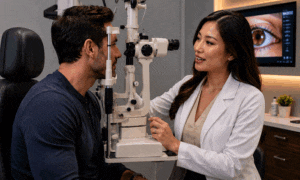
At Southwest Eye Institute, your exam may include vision testing, eye pressure measurement, slit-lamp evaluation, dilation, retinal evaluation, and symptom-specific testing. Your doctor may also discuss your medical history, medications, diabetes status, screen habits, dry eye symptoms, and whether your vision changes happen at certain times of day.
The goal is to find the cause of changes in your vision prescription, not simply update a number. If your symptoms point to dry eye, cataracts, keratoconus, glaucoma, or another eye condition, your doctor can explain your treatment options and next steps.
Southwest Eye Institute serves patients in El Paso, Las Cruces, and surrounding communities with medical and surgical eye care. If your prescription keeps changing, the right exam can help you understand why and what to do next.
Protect Your Vision Today
Vision prescription changes can be simple, but frequent changes may signal that your eyes need more than a routine glasses update. If your vision keeps shifting, feels unstable, or no longer seems clear with new glasses, schedule an eye exam with Southwest Eye Institute. Our team can evaluate your eye health, identify possible causes, and help you take the next step toward clearer, more stable vision.
FAQ: Vision Prescription Changes
Your vision prescription may keep changing because of dry eye, cataracts, blood sugar fluctuations, cornea changes, presbyopia, medication effects, or another eye health issue. A comprehensive medical eye exam can help determine whether the change is routine or related to an underlying condition.
Occasional prescription changes can be normal, especially during childhood, early adulthood, or after age 40. Frequent, sudden, or one-sided changes are less typical and should be checked by an eye doctor.
Yes. Dry eye can make vision blur and clear throughout the day, which can make your glasses feel inconsistent. Treating the tear film may improve visual stability before your doctor finalizes a prescription.
Yes. Cataracts can change how light focuses inside the eye, which may lead to new or frequent glasses prescription changes. Early cataracts may improve with updated glasses, but advanced cataracts may require surgery when vision interferes with daily life.
Yes. Blood sugar fluctuations can temporarily change how the eye focuses, causing blurry vision or unstable prescription results. If you have diabetes, your blood sugar should be stable before getting a final glasses prescription whenever possible.
You should schedule an eye exam if your prescription changes several times in a short period, your vision changes suddenly, or you also notice glare, halos, distorted vision, eye pain, redness, floaters, or trouble seeing at night.
Yes. Southwest Eye Institute can evaluate frequent vision prescription changes in El Paso and check for medical causes such as dry eye, cataracts, glaucoma, keratoconus, diabetes-related eye changes, and other eye health concerns.
Yes. Southwest Eye Institute serves patients in Las Cruces and can provide comprehensive medical eye exams to help determine why vision keeps changing. Your doctor can explain whether your symptoms are related to the prescription itself or another eye condition.
Not always. If your prescription keeps changing, it may be better to schedule a medical eye exam before buying another pair of glasses. Your doctor can check whether dry eye, cataracts, blood sugar, cornea changes, or another issue is making your vision unstable.
Related Posts
Better Vision Starts Here!
If you’re experiencing vision changes, don’t wait until they worsen. Schedule your eye exam today!