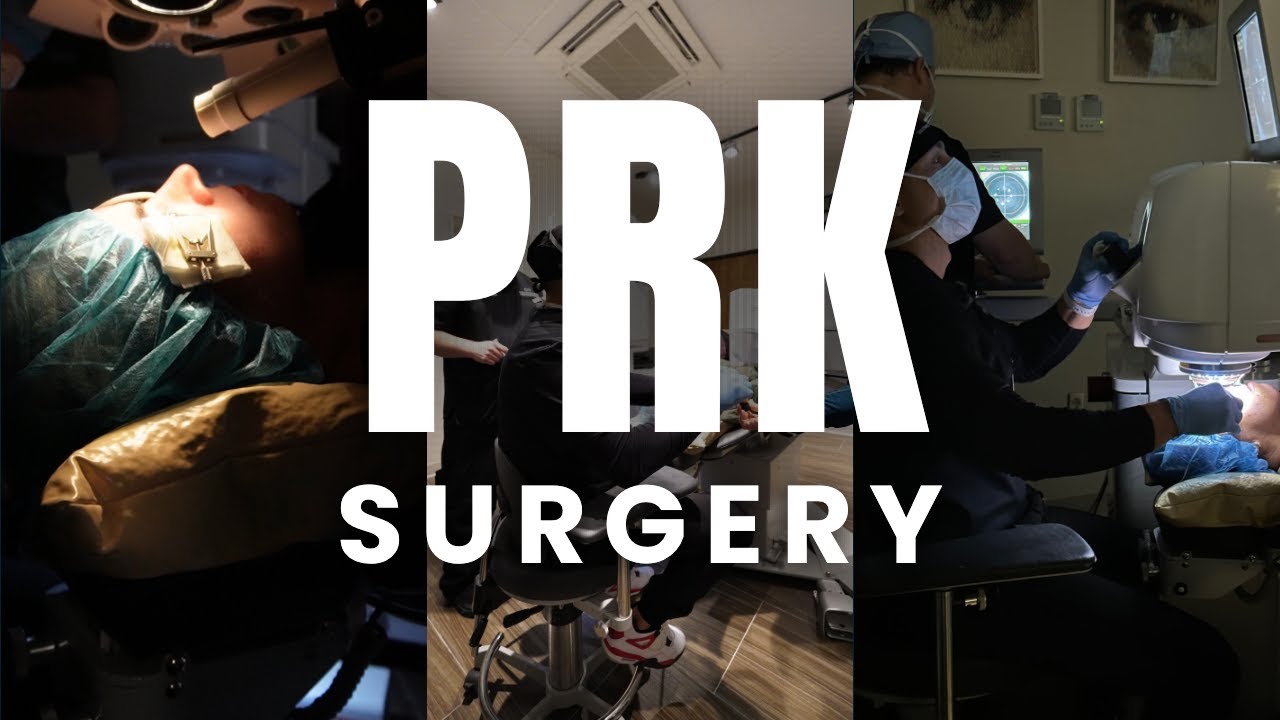
PRK Eye Surgery

PRK is a proven, flap-free laser vision correction procedure designed to reduce your dependence on glasses or contact lenses. Schedule a FREE vision correction consultation at Southwest Eye Institute to find out if PRK is right for you.


What Is PRK?

Photorefractive keratectomy, or PRK, is a type of laser vision correction that reshapes the cornea to improve how light focuses inside the eye. PRK can correct common refractive errors, including nearsightedness, farsightedness, and astigmatism. By reshaping the cornea, PRK can help reduce a patient’s dependence on glasses or contact lenses for everyday vision.

Not every patient who wants laser vision correction will be a good candidate for the same procedure. During a comprehensive vision correction evaluation, your eye doctor will assess factors such as your prescription, corneal thickness and shape, overall eye health, tear film, age, and lifestyle. These measurements help determine whether PRK, LASIK, EVO ICL, or another vision correction option may be the best fit for your eyes and long-term vision goals.

Southwest Eye Institute Voted #1 Laser Eye Surgery in El Paso

Southwest Eye Institute has been voted the #1 Laser Eye Surgery in El Paso, Texas, a recognition that reflects its long-standing commitment to exceptional patient care, surgical precision, and life-changing vision outcomes. We are dedicated to helping patients see clearly and live confidently, and we continue to set the standard for eye care in El Paso.

Best of El Paso - 6 years

PRK Candidacy Criteria

Generally 18 Years or Older

Has Stable Glasses/Contact Lens Prescription

Has Healthy Eyes and Corneas

Have a Treatable Refractive Error

Proper Corneal Measurements

Not Pregnant or Nursing

Patient during his comprehensive eye exam.

Upgrade Your Vision!

The best way to find out if PRK is right for you is through a comprehensive evaluation. Request your FREE modern vision correction consultation today and take the first step toward clearer vision.

How PRK Compares to Other Vision Correction Options

What is PRK? Young woman smiling outdoors with a paddle racket, illustrating an active lifestyle after PRK vision correction

PRK vs LASIK

LASIK creates a thin corneal flap. PRK does not.

LASIK is not for thin corneas. PRK is for thinner corneas.

LASIK offers faster initial visual recovery. PRK requires additional healing time as the corneal surface regenerates.

Learn More > LASIK Eye Surgery
EVO ICL lens implant used at Southwest Eye Institute.

PRK vs EVO ICL

PRK reshapes the cornea with a laser. EVO ICL does not remove corneal tissue.

EVO ICL is considered for those with more severe nearsightedness.

Learn More > EVO ICL
Patients enjoying life Post RLE.

PRK vs RLE

PRK corrects vision by reshaping the cornea while preserving your natural lens. RLE removes the natural lens and replaces it with an artificial intraocular lens.

RLE is more relevant than PRK as patients age and age-related changes in the natural lens begin to affect near vision or overall visual quality.

Learn More > Refractive Lens Exchange (RLE)

The PRK Procedure: Behind The Scenes

During PRK surgery, your surgeon begins by using numbing eye drops to keep you comfortable, then gently removes the thin outer layer of the cornea, called the epithelium. Using detailed measurements collected during your preoperative exam, an excimer laser precisely reshapes the underlying corneal tissue so light can focus more accurately on the retina. Unlike LASIK, no corneal flap is created. Once the laser treatment is complete, a soft bandage contact lens is placed over the eye to protect the surface while the epithelium naturally grows back over the next several days. The laser portion of the procedure typically takes only a short time, while most of the healing happens gradually after you leave the surgical center.

Play Video
Video thumbnail

PRK Results and Outcomes

PRK has been used for decades and remains an established form of laser vision correction. For appropriately selected patients, the goal is the same as with LASIK: clearer vision and reduced dependence on glasses or contact lenses.

Results depend on several factors, including your starting prescription, corneal shape and thickness, eye health, healing response, and treatment plan.

The corneal surface layer must regenerate after PRK. Vision may initially appear blurry or fluctuate. Patients may experience tearing, light sensitivity, irritation, or a gritty sensation during the first several days.

As healing progresses, vision typically becomes clearer. Improvement can continue for several weeks, and some patients experience gradual changes for several months before their vision fully stabilizes.

Your Southwest Eye Institute team will monitor your recovery through follow-up visits and let you know when it is appropriate to return to driving, exercise, work, and other activities.

Individual results and recovery times vary.

Learn More About PRK Recovery

See Like a VIP!

At Southwest Eye Institute, we know that your sight is everything. Every patient receives VIP treatment, with personalized care from local expert physicians and support staff. We take the time to understand your needs and provide the treatment experience you deserve. From your first step to your last follow-up appointment, we ensure all your questions are answered and deliver an experience unlike anywhere else that delivers comfort and confidence.

FAQ: PRK Eye Surgery

PRK, or photorefractive keratectomy, is a laser vision correction procedure that reshapes the cornea so light can focus more accurately on the retina. During PRK, the thin outer layer of the cornea is removed, and an excimer laser is used to reshape the underlying tissue. The surface layer then naturally grows back during recovery.

Both PRK and LASIK reshape the cornea with a laser, but PRK does not create a corneal flap. Instead, the surface layer of the cornea is removed and allowed to regenerate. Because of this, PRK generally has a slower initial recovery than LASIK but may be appropriate for patients whose corneal measurements or lifestyle make a flap less desirable.

Good PRK candidates are typically adults with a stable vision prescription, healthy eyes, and a refractive error that can be treated with laser vision correction. Your surgeon will also evaluate your corneal thickness and shape, overall eye health, and lifestyle before determining whether PRK is right for you.

Possibly. Because PRK does not require the creation of a LASIK flap, it may be recommended for some patients with thinner corneas. However, PRK still requires enough healthy corneal tissue to safely perform the treatment, so detailed corneal measurements are necessary before determining candidacy.

Numbing eye drops are used during PRK, so patients generally do not feel the laser treatment itself. During the first few days afterward, some patients experience discomfort, irritation, tearing, light sensitivity, or a gritty sensation as the corneal surface heals. A bandage contact lens is typically used to help protect the eye during this period.

The surface layer of the cornea usually begins growing back over the first several days after PRK. Vision may initially be blurry or fluctuate, then gradually improve as the eye heals. Many patients can resume normal activities within several days, but visual sharpening and stabilization can continue for weeks or even several months.

Recovery varies by patient. Many people can return to work within several days, depending on their comfort and vision, but driving should wait until your vision is clear enough and your eye doctor confirms it is safe. Your surgeon will also provide instructions about exercise, swimming, contact sports, and other activities during healing.

Yes. PRK can be used to treat nearsightedness, farsightedness, and astigmatism within approved treatment ranges. Whether PRK can treat your specific prescription depends on factors such as your prescription strength, corneal measurements, and overall eye health.

PRK permanently reshapes the cornea, but your eyes can still change naturally over time. Age-related conditions such as presbyopia and cataracts can affect vision later in life, and some patients may eventually need reading glasses, prescription eyewear, or additional vision correction.

Like any surgical procedure, PRK has potential risks and side effects. These can include temporary discomfort, dry eye, blurry or fluctuating vision, glare, halos, light sensitivity, corneal haze, infection, undercorrection, overcorrection, or the continued need for glasses or contact lenses. Your surgeon will review your individual risks and expected outcomes before treatment.

Locations

1400 Common Drive
El Paso, TX 79936

Clinic & Surgery Center

150 S. Resler Drive
El Paso, TX 79912

Clinic & Surgery Center

Doctors

Calvin McNelly, M.D.

Ophthalmologist and Refractive Cataract Surgeon

Javier E. De la Torre, M.D.

Refractive Surgeon & Medical Ophthalmologist / Anterior Segment Surgery