EVO ICL: What it is, How it Helps, and Recovery with Southwest Eye Institute in El Paso, Texas
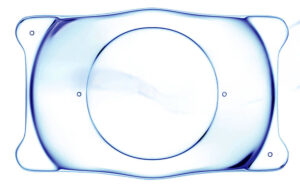
EVO ICL is an implantable lens that corrects nearsightedness, with or without astigmatism, through a minimally invasive procedure. It sits behind your iris and in front of your natural lens, so it improves focus without removing corneal tissue like LASIK or PRK. This matters most for people with higher prescriptions, thinner corneas, or dry eye concerns, because those factors can limit how much reshaping the cornea can safely handle.
At Southwest Eye Institute in El Paso, Texas, we compare EVOICL with LASIK and PRK during your consultation so you can choose the safest option for your eyes, not just the most popular one.
What is EVO ICL?
EVO ICL stands for EVO Implantable Collamer Lens. It is a soft, biocompatible lens implanted inside the eye to correct vision. Unlike LASIK or PRK, EVOICL does not reshape the cornea. Instead, it adds a lens to help light focus properly on the retina, which is why many people describe it as “additive” vision correction.
The lens is placed behind the iris and in front of your natural lens. You do not feel it once it’s in place, and you do not remove it daily like a contact lens.
Myopia correction intended for -3.0 D to -15.0 D, with reduction up to -20.0 D
Astigmatism treatment intended for 1.0 D to 4.0 D
That said, candidacy depends on more than prescription. Your eye measurements, including anterior chamber depth and overall eye health, matter just as much.
Why People choose EVO ICL instead of LASIK or PRK
When you compare vision correction options, the “best” choice usually comes down to one question: Do we want to reshape the cornea, or avoid removing corneal tissue?
EVO ICL often becomes the front-runner when:
You have a high prescription and would need too much corneal reshaping for LASIK or PRK.
Your corneas are thinner, and your surgeon wants to avoid reducing corneal tissue.
You have dry eye concerns and want an option that may be a better fit than corneal laser correction, depending on your exam.
Southwest Eye Institute has a helpful comparison page that explains why EVO ICL tends to shine for higher prescriptions, thinner corneas, or dry eye concerns.
How the Procedure Works
This outpatient procedure is typically quick, lasting about 20–30 minutes. Your surgeon makes a small incision and places the lens into position behind the iris.
What you can usually expect:
Your eye is numbed with drops.
Your surgeon places the lens through a small incision.
You go home the same day with a clear aftercare plan.
Your exact steps may vary based on your eye measurements and whether one or both eyes are treated close together.
Recovery and What Vision Feels like Afterward
Most patients notice rapid improvement in vision, but your eye still needs time to settle. It is normal to have:
Mild scratchiness or watering at first
Light sensitivity early on
Vision that sharpens over days to weeks
Your follow-up visits matter because your doctor checks healing, lens position, and eye pressure, and confirms that your vision is stabilizing as it should.
Risks and Side Effects You Should Understand
Every procedure has risks, and a good consultation should be clear about them. With implantable collamer lenses, commonly discussed risks include:
Lens position issues, sometimes described as vault or positioning concerns
The FDA’s patient discusses endothelial cell loss as a potential risk that surgeons monitor over time.
The point is not to scare you. The point is to make sure you choose a procedure with your eyes wide open, and with a plan for safe monitoring.
Is it Permanent or Removable?
This advanced lens is designed to remain in place long-term, but it is often described as reversible, meaning the lens can be removed by a surgeon if needed. That matters to some patients who prefer an “additive” option over a corneal reshape.
Who is a Good Candidate?
Your surgeon will determine candidacy based on detailed measurements, not just your prescription. In general, EVO ICL may be considered when:
Your eye anatomy meets safety requirements for lens sizing and placement
If EVO ICL is not a match, you may still qualify for LASIK, PRK, or another option, depending on your exam.
EVO ICL at Southwest Eye Institute in El Paso, Texas
At Southwest Eye Institute, your refractive consultation is designed to answer one question: Which option is safest and most likely to give you stable vision? Our team evaluates EVO ICL alongside LASIK and PRK, so you can leave with a clear recommendation based on your measurements.
If you want to understand the consult process before you come in, this page walks you through what happens step by step:
If you’re still deciding between LASIK and EVO ICL, you don’t have to guess. This side-by-side guide breaks down how LASIK and EVO ICL differ, who each option tends to suit best, and what factors, such as prescription strength, corneal thickness, and dry-eye risk, can guide the recommendation. Read more on LASIK vs EVO ICL here to get a clearer sense of which direction may make the most sense before your consultation.
Find Out if EVO ICL is Right for You
If you want to reduce your dependence on glasses or contacts and you think your prescription may be “too high” for LASIK, schedule a refractive consultation at Southwest Eye Institute in El Paso, Texas, to find out if LASIK, PRK, or EVO ICL is the best match for your eyes, your prescription, and your long-term vision goals.
FAQ: EVO ICL
No. LASIK reshapes the cornea, while EVO ICL adds an implantable lens behind the iris and in front of your natural lens.
EVO ICL is intended for moderate to high nearsightedness, and the toric version can treat certain ranges of astigmatism.
Many sources describe the procedure as a quick outpatient process, often around 20–30 minutes, though timing varies by patient and clinic flow.
No. EVO ICL corrects vision without removing corneal tissue, unlike LASIK and PRK.
It is designed to be long-lasting, but it is often described as reversible, meaning the lens can be removed by a surgeon if medically necessary.
Your surgeon will review risks such as elevated eye pressure, cataract formation, inflammation, and other potential complications, and will monitor you closely after surgery.
It can be, especially when corneal tissue or thin corneas make laser options less ideal. The best choice depends on your measurements and goals.
The next step is a refractive consultation at Southwest Eye Institute in El Paso, Texas, where your surgeon measures your cornea and eye anatomy and compares EVO ICL, LASIK, and PRK.
Related Posts
Better Vision Starts Here!
If you’re experiencing vision changes, don’t wait until they worsen. Schedule your eye exam today!